Choosing the right approach to images of paradise in heaven starts with clear context, practical filters, and realistic expectations.
Introduction to Paradise in Heaven
The concept of paradise in heaven has been a subject of fascination and curiosity for centuries, transcending religious and cultural boundaries. It represents a place of eternal bliss, peace, and happiness, where the righteous and virtuous dwell in harmony with their creator. The depiction of paradise in heaven has evolved over time, influenced by various artistic, literary, and theological interpretations.
Historical Depictions of Heaven
In ancient civilizations, the concept of paradise was often associated with a mythical garden or a heavenly realm, where the gods and goddesses resided. The Greeks, for example, believed in the Elysian Fields, a paradise for heroes and virtuous individuals. Similarly, in Norse mythology, Valhalla was the heavenly abode of fallen warriors. These early depictions of paradise have had a lasting impact on the development of religious art and literature.
Religious Art and Architecture The representation of paradise in heaven has been a dominant theme in
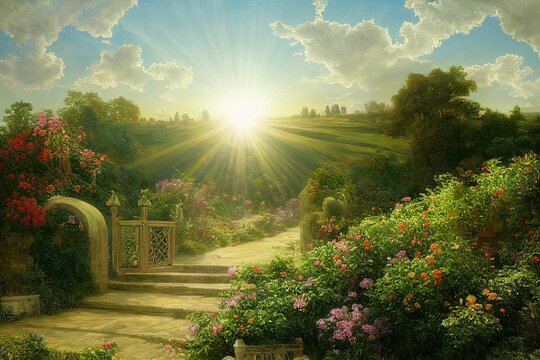
religious art and architecture throughout history. In Christianity, the concept of heaven is often depicted as a celestial realm, with angels, saints, and the blessed dwelling in the presence of God. The Sistine Chapel, with its magnificent frescoes by Michelangelo, is a prime example of this artistic tradition. In Islam, the concept of Jannah (paradise) is often depicted as a lush garden, with rivers, trees, and beautiful maidens.
Literary Descriptions of Paradise
Literary works have also played a significant role in shaping our understanding of paradise in heaven. In John Milton's epic poem, "Paradise Lost," the concept of heaven is depicted as a realm of beauty and wonder, with angels and archangels dwelling in the presence of God. Similarly, in Dante Alighieri's "The Divine Comedy," the concept of paradise is depicted as a series of ascending levels, culminating in the beatific vision of God.
Common Features of Paradise in Heaven Despite the diverse depictions of paradise in heaven, there are certain
common features that recur across cultures and traditions. These include:
- A sense of beauty and wonder
- The presence of a divine or supernatural being
- A feeling of peace and tranquility
- The absence of suffering and pain
- A sense of community and fellowship with others
The Significance of Paradise in Heaven
The concept of paradise in heaven has significant implications for our understanding of the human condition and our place in the world. It offers a vision of a better world, a world that is free from suffering and pain, and where the righteous and virtuous are rewarded for their good deeds. This vision has inspired countless individuals throughout history to strive for a higher moral and spiritual plane.

Challenges to the Concept of Paradise in Heaven Despite its enduring appeal, the concept of paradise in heaven has faced numerous
challenges and criticisms over the centuries. Some have argued that the idea of an afterlife is incompatible with the principles of science and reason, while others have criticized the concept of a reward-and-punishment system as morally simplistic. Furthermore, the diversity of religious and cultural traditions has led to conflicting visions of paradise, raising questions about the nature of truth and the validity of competing claims.
Practical Implications of Paradise in Heaven The concept of paradise in heaven has
practical implications for our daily lives, inspiring us to cultivate virtues such as compassion, forgiveness, and kindness. It also encourages us to strive for a higher moral and spiritual plane, seeking to create a better world for ourselves and others. By embracing the ideals of paradise, we can work towards creating a more just and peaceful society, where the values of love, mercy, and justice are upheld.
Conclusion
The concept of paradise in heaven remains a powerful and enduring symbol of hope and inspiration, offering a vision of a better world that transcends the limitations and sufferings of our earthly existence.
Through its diverse depictions in art, literature, and theology, we gain a deeper understanding of the human condition and our place in the world. As we strive to create a more just and peaceful society, the ideals of paradise in heaven continue to inspire and guide us, reminding us of the importance of compassion, forgiveness, and kindness.
Frequently Asked Questions
- What is the concept of paradise in heaven?
- The concept of paradise in heaven refers to a place of eternal bliss, peace, and happiness, where the righteous and virtuous dwell in harmony with their creator.
- How has the depiction of paradise in heaven evolved over time?
- The depiction of paradise in heaven has evolved over time, influenced by various artistic, literary, and theological interpretations, reflecting the cultural, religious, and philosophical traditions of different civilizations.
- What are some common features of paradise in heaven?
- Common features of paradise in heaven include a sense of beauty and wonder, the presence of a divine or supernatural being, a feeling of peace and tranquility, the absence of suffering and pain, and a sense of community and fellowship with others.
- What are some criticisms of the concept of paradise in heaven?
- Some criticisms of the concept of paradise in heaven include the argument that the idea of an afterlife is incompatible with the principles of science and reason, and the criticism that the concept of a reward-and-punishment system is morally simplistic.
- How can the concept of paradise in heaven inspire us in our daily lives?
- The concept of paradise in heaven can inspire us to cultivate virtues such as compassion, forgiveness, and kindness, and to strive for a higher moral and spiritual plane, seeking to create a better world for ourselves and others.
- What is the significance of paradise in heaven in different religious traditions?
- The significance of paradise in heaven varies across different religious traditions, reflecting the unique theological and philosophical perspectives of each faith.
- How can we reconcile the diversity of visions of paradise in heaven?
- Reconciling the diversity of visions of paradise in heaven requires a nuanced understanding of the cultural, historical, and theological contexts in which these visions have evolved, as well as a willingness to engage in respectful dialogue and mutual understanding.